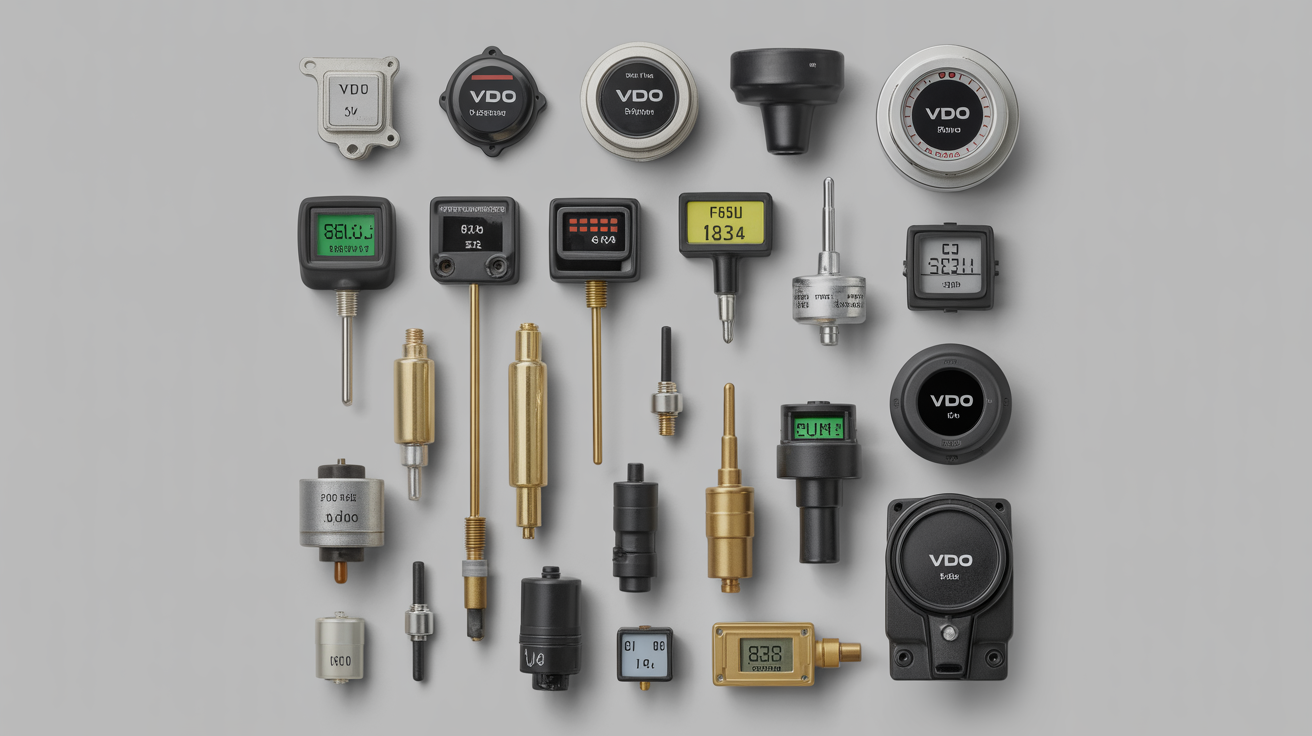
The Ultimate Guide to Choosing the Right VDO Sensors and Senders
Expert guide to selecting VDO sensors and senders for automotive, marine, and commercial applications. Learn about compatibility, specifications, and proper matching.
VDO is a world leader in instrumentation, and their sensors and senders are the unsung heroes that provide the critical data to your gauges. Choosing the right sensor is not just about compatibility; it's about ensuring accuracy and reliability for your specific application. This guide will help you navigate the vast world of VDO sensors and senders for automotive, marine, and commercial use.
Understanding the Basics: How VDO Sensors Work
VDO sensors work by converting a physical measurement (like pressure, temperature, or fluid level) into an electrical signal that your gauge can interpret. The two main types of signals are:
**Resistance-Based:** The sensor's resistance changes in response to the measured variable. This is common for temperature and fuel level senders.
**Voltage-Based:** The sensor outputs a varying voltage signal.
Choosing the Right Sensor for Your Application
1. Automotive Applications
**Pressure Senders:** For oil pressure, choose a sender with a pressure range that matches your engine's specifications. VDO offers senders in various ranges (e.g., 0-80 PSI, 0-150 PSI) and thread types to fit most engines.
**Temperature Senders:** Select a water or oil temperature sender with the correct resistance range for your gauge. VDO has different senders for water (typically up to 120°C) and oil (up to 150°C).
**Fuel Level Senders:** The key is to match the ohm range of the sender to your gauge. American vehicles typically use a 240-33 ohm range, while European vehicles often use 10-180 ohms. VDO offers both fixed-length and adjustable senders to fit various tank depths.
**Speed Sensors:** VDO offers a variety of speed sensors, including GPS-based units and sensors that work with the vehicle's transmission.
2. Marine Applications
**Floating Ground:** This is a critical feature for marine sensors. A floating ground (or insulated return) isolates the sensor's electrical ground from the boat's hull, which helps prevent galvanic corrosion.
**Dual Station Capability:** If you have a flybridge or a second helm station, you'll need senders that can drive two gauges simultaneously. VDO offers dual-station senders for pressure, temperature, and rudder angle.
**NMEA 2000 Compatibility:** For modern marine electronics, VDO's ViewLine and OceanLink series offer gauges and sensors that are NMEA 2000 compatible, allowing for easy integration with your existing network.
**Durability:** Marine environments are harsh. VDO's marine-specific products are built with corrosion-resistant materials and are sealed to protect against moisture.
3. Commercial and Industrial Applications
**Heavy-Duty Construction:** VDO's commercial-grade sensors are built to withstand the rigors of heavy machinery, including vibration and extreme temperatures.
**High-Pressure and High-Temperature Ratings:** Commercial applications often require sensors with higher operating ranges. VDO offers a wide selection of sensors to meet these demands.
**Warning Contacts:** Many VDO sensors are available with built-in warning contacts that can trigger an alarm or a warning light when a critical threshold is reached. This is an essential feature for protecting expensive equipment.
Key Factors to Consider When Choosing a VDO Sensor
Gauge Compatibility
Always match the sensor to the gauge. Check the gauge's specifications for the required input signal (ohm range, voltage, etc.).
Thread Type and Size
Ensure the sensor's thread matches the port on your engine or tank. VDO offers a wide variety of thread types, including NPT, BSP, and metric sizes (M10, M12, M14, M18).
Pressure or Temperature Range
Select a sensor with a range that is appropriate for your application.
Grounding
Choose between common ground and floating ground based on your application (floating ground is highly recommended for marine use).
Special Features
Consider if you need features like a warning contact or dual-station capability.
Common VDO Sender Specifications
Pressure Senders
- **Ranges:** 0-5 bar (0-80 PSI), 0-10 bar (0-150 PSI), 0-25 bar (0-400 PSI) - **Threads:** 1/8 NPT, 1/4 NPT, M10x1, M12x1.5, M14x1.5, M18x1.5 - **Connections:** Spade terminal, M4 stud, knurled nut - **Warning contact:** Optional
Temperature Senders
- **Ranges:** 40-120°C (water), 50-150°C (oil), up to 900°C (pyrometer) - **Resistance:** 10-180 Ohm (European), 240-33 Ohm (American) - **Threads:** M10x1, M12x1.5, M14x1.5, M18x1.5, 1/8 NPT, 1/4 NPT - **Marine floating ground:** Available
Fuel Level Senders
- **Ohm ranges:** 10-180, 240-33, 0-90, 73-10 - **Lengths:** Fixed (200-600mm) or adjustable - **Mounting:** SAE 5-hole flange, European flange, 1.5" NPT - **Material:** Brass (automotive), stainless steel (marine)
Troubleshooting Sensor-Related Issues
**Inaccurate Gauge Reading:** This is often due to an incorrect sensor/gauge combination. Verify that the sensor's specifications match the gauge's requirements.
**No Reading:** Check for a broken wire or a faulty sensor. You can test a resistance-based sender with a multimeter to see if its resistance changes as expected.
**"EEEE" Error on Digital Gauges:** This error message on some gauges indicates an invalid signal from the sensor. Check the wiring and ensure the sensor is functioning correctly.
Professional Advice
At VDO Parts South Africa, we understand that choosing the right sensor can be complex. Our technical team can help you:
- Identify the correct sender for your gauge - Cross-reference competitor part numbers - Provide wiring diagrams and installation instructions - Source hard-to-find senders for specialty applications
**Get Expert Help:** 011 568 9948 | WhatsApp: 084 334 3269 | Email: via contact form
Conclusion
By carefully considering your application and the factors outlined in this guide, you can confidently choose the right VDO sensors and senders to provide you with accurate and reliable data for years of trouble-free operation.
**Ready to order?** [Contact us for a quote](/contact) or call 011 568 9948.
Need Help with VDO Products?
Our technical team is here to assist with product selection, installation, and troubleshooting